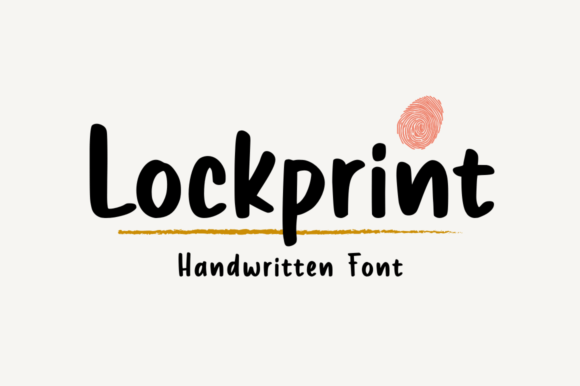
Lockprint: A Bold Handwritten Font for Crafters & Sellers
If you've ever spent 20 minutes scrolling through font libraries trying to find *that one* script that feels both confident and handmade—something that reads clearly on a candle label, pops on a wedding welcome sign, and still carries warmth on a printable planner page—you’ll understand why Lockprint landed in my cart within seconds. It’s not just another handwritten font. It’s a Script Amp typeface built for makers who need personality without sacrificing practicality.
Lockprint stands out with its thick, intentional strokes and rhythmic flow—it’s bold enough to command attention at small sizes, yet retains the organic charm of real pen-on-paper movement. There’s no shaky uncertainty here. Every curve feels deliberate. Every downstroke has presence. That balance is rare in script fonts, especially ones designed for commercial use across physical and digital products.
Where Lockprint Shines in Real Craft Projects
I’ve used Lockprint across six different product lines this season—and each time, it elevated perceived value. On kraft paper gift tags for my botanical soap shop? Instant boutique appeal. On vinyl-cut stickers for a local coffee roaster’s limited-edition bag labels? Crisp, legible, and unmistakably handcrafted. Even at 8pt on a 1" x 2" sticker, Lockprint holds its shape without blurring or losing character—thanks to its generous spacing and strong contrast between thick and thin strokes.
Here’s where it works especially well:
- Candle & product labels: Lockprint’s weight gives candles, bath bombs, and small-batch jams a premium, artisanal look—no extra design flourishes needed.
- Wedding stationery: Use it for names on invitations, “Welcome” on farmhouse-style signs, or “Mr. & Mrs.” on ceremony signage. Its confidence reads as joyful—not stiff.
- Digital printables: Planner headers, habit trackers, and printable wall art gain instant visual hierarchy. I’ve paired Lockprint titles with clean sans serif body text (like Montserrat or Inter) for balanced, scannable layouts.
- SVG designs for Cricut & Silhouette: The font cuts cleanly—even swashes and alternates render smoothly when converted to outlines. No jagged edges or unexpected gaps in cut files.
- Seasonal packaging: Halloween treat bags, holiday mug wraps, Easter egg labels—all benefit from Lockprint’s expressive energy without looking childish or overly decorative.
Readability Meets Real-World Production
Let’s talk honestly: many beautiful script fonts fall apart at small sizes or on textured surfaces. Lockprint doesn’t. Its open counters (the enclosed spaces inside letters like ‘a’, ‘e’, and ‘o’) stay clear even when printed on uncoated cardstock or heat-pressed onto cotton tote bags. I tested it at 10pt on matte-finish greeting cards—still fully legible. At 14pt on 3"x5" product tags? Gorgeous and functional.
For cutting machines, I recommend converting Lockprint to outlines before sending to your software—especially if using swashes or alternate characters. The font includes standard OpenType features: discretionary ligatures, stylistic alternates, and initial/terminal swashes. These aren’t just decorative extras—they help avoid awkward letter collisions (like “r” + “l” or “f” + “i”) and add subtle polish to longer phrases.
Smart Pairings That Keep Your Brand Cohesive
Lockprint is a display font—meaning it shines brightest in headlines, names, and short impactful phrases. It’s not intended for paragraphs. But that’s where smart pairing comes in. I consistently pair it with a neutral, highly legible sans serif (think Poppins or Lato) for body text, pricing, ingredients, or care instructions. The contrast reinforces hierarchy: Lockprint says *“this is who we are,”* while the sans serif quietly says *“here’s what you need to know.”*
For vintage-inspired branding, try pairing Lockprint with a gentle serif like Playfair Display—just keep serif usage minimal (dates, fine print, or footer text). Avoid pairing it with other scripts or overly decorative fonts; Lockprint carries enough personality on its own.
Licensing, Formats & What You’ll Actually Get
Lockprint comes in OTF and TTF formats—fully compatible with Canva, Adobe Creative Cloud, Cricut Design Space, Silhouette Studio, and most major design tools. It supports multilingual Latin-based languages (including accents for French, Spanish, and German), which matters if you sell internationally or create bilingual wedding invites.
Most importantly: Lockprint includes a commercial license. That means you can use it to create and sell physical products (stickers, mugs, apparel), digital downloads (planner bundles, SVG kits), client work (logo concepts, social media templates), and even editable Canva templates—as long as you’re not reselling the font file itself. Always double-check the license terms before launching a new product line, but with Lockprint, you’re covered for Etsy shops, Shopify stores, and freelance design gigs.
Why This Font Fits Your Workflow—Not Just Your Mood Board
So many script fonts feel like mood boards: beautiful in isolation, frustrating in practice. Lockprint bridges that gap. It’s expressive, yes—but also engineered for clarity, consistency, and craft-friendly output. Whether you're laser-engraving wooden spoons, printing foil-stamped menus, or designing Instagram story templates for fellow sellers, Lockprint delivers reliable results without constant kerning tweaks or last-minute font swaps.
It’s become my go-to for any project where I want customers to feel the human touch—without compromising on professionalism. That’s the quiet power of a well-designed handwritten font: it whispers craftsmanship, but speaks with authority.
If your current script font makes you second-guess readability on product tags—or if you’ve ever hesitated to use a favorite font because it didn’t hold up in mockups or on textured paper—give Lockprint a test run. Not as a trend, but as a working tool. One that earns its place in your font library, not just your inspiration folder.